The Fall of Aeroline: What Transportation Hubs Mean for Property
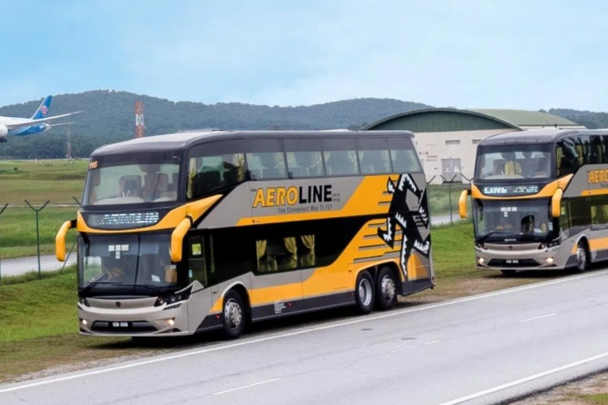
In May 2026, Aeroline announced it was leaving Kuala Lumpur entirely — the end of a 23-year run as the city's most recognised premium coach brand. The exit is a transport story on the surface. Underneath, it is a lesson every property investor should absorb: when the government decides where a transport hub sits, it also decides — quietly and usually permanently — where foot traffic, retail spending, and eventually property value concentrate.
How Aeroline Lost Kuala Lumpur
Aeroline built its name on a simple idea: bring the bus to where passengers already are, instead of making them travel to a terminal. For over two decades that meant operating out of Corus Hotel on Jalan Ampang — steps from KLCC, connected to the LRT, and convenient for the business travellers who made up its core audience. The arrangement worked for both sides: Aeroline got a premium city-centre base, and the hotel filled roughly 7,000 room nights a year from the passengers passing through.
The unravelling started with regulation. Malaysia's Land Public Transport Agency (APAD) had spent years pushing operators away from hotel pickups and curbside stops toward licensed terminals only. Aeroline was hit with a fleet suspension in late 2025 over its use of non-approved locations, and transport experts publicly called the terminal-only rule "outdated and impractical" — but APAD held the line.
The second blow was commercial. Corus Hotel closed on 18 January 2026, after owner MUI sold the 1.46-acre site to Mah Sing for RM260 million — ending both the hotel and Aeroline's 23-year partnership with it. Aeroline relocated briefly to TRX before regulators issued a fresh directive in May 2026 requiring a move to a licensed terminal: 1 Utama, IOI City Mall, or the newly designated LaLaport Bukit Bintang City Centre (BBCC). Aeroline reviewed all three and judged that none could replicate its service model without raising fares or degrading the experience.
"Rather than compromising our values, charging you more, or delivering a compromised experience, we have made the very difficult decision to leave KL entirely." — Aeroline, May 2026
On 30 May 2026, Aeroline confirmed its full withdrawal from Kuala Lumpur — a direct casualty of a regulatory standoff it ultimately could not win.
Why Transportation Hubs Shape Property Values
The Aeroline story is bigger than one bus company. It illustrates a principle every property investor in Malaysia should understand: where transport concentrates, economic activity follows, and where economic activity concentrates, property values rise. This is not just about proximity to an LRT station — a hub creates a predictable, high-frequency flow of people through one location, and that flow generates F&B spending, retail footfall, and eventually residential demand from people who want to live near where the action already is. Corus Hotel proved this in reverse: a bus service alone sustained 7,000 hotel room nights a year, purely as a byproduct of moving passengers through that address.
When government designates a location as an official transport hub, it does something no private arrangement can match — it makes the flow permanent and policy-backed. Hotels can be sold, private deals can lapse, but a government-endorsed hub becomes part of the city's infrastructure.
LaLaport BBCC: The Government's New Hub
Transport Minister Anthony Loke confirmed in January 2026 that LaLaport BBCC was "almost fully ready" to be licensed as the primary KL-Singapore express bus hub, with licensing following in February. The location makes sense geographically: LaLaport sits in the heart of Bukit Bintang, within walking distance of Berjaya Times Square and Jalan Alor, and connects directly to the Hang Tuah LRT and Monorail interchange via the BBCC Transit Hub — a materially easier journey for KL-Singapore travellers than the outlying TBS terminal.
LaLaport inherits a meaningful share of the daily passenger volume that once flowed through Corus KLCC and the curbside stops near Berjaya Times Square — travellers who arrive early, wait for departures, eat, and shop. That transit-driven footfall now layers onto a precinct that is itself still being built out: BBCC sits on the 19.4-acre former Pudu Prison site, developed as a RM8.7 billion integrated township of nine towers, two malls, an entertainment hub, and — in its final phase — an 80-storey signature tower.
Owning a Piece of the Hub
For investors watching BBCC develop, SWNK Houze is the most accessible entry point today. It's a 31-storey, 441-unit serviced residence tower under construction next to the planned Signature Tower site, connected by pedestrian bridge to the BBCC Transit Hub — one minute on foot to LaLaport. The unit mix runs from studios to three-bedroom layouts, semi-furnished with kitchen cabinets, appliances, wardrobes, and air-conditioning — a practical package for owners targeting the rental market. At roughly 60% taken up as of late 2024, availability remains, but as BBCC's later phases deliver and the hub status solidifies, the window for entry-level pricing narrows.
The thesis is straightforward: SWNK Houze sits inside a government-endorsed transport hub, within a masterplan that is now generating the daily commuter, tourist, and office traffic that sustains rental demand. What happened to Aeroline is a reminder that transport arrangements built on private deals are fragile. What's being built at BBCC — government-licensed, transit-anchored, and connected to three major precincts — is the more durable kind.
Interested in SWNK Houze or other BBCC opportunities? Speak to us now →